Magic Kits vs. Magic Books: Birthday Gifts for a 9-Year-Old Who Loves Magic Tricks

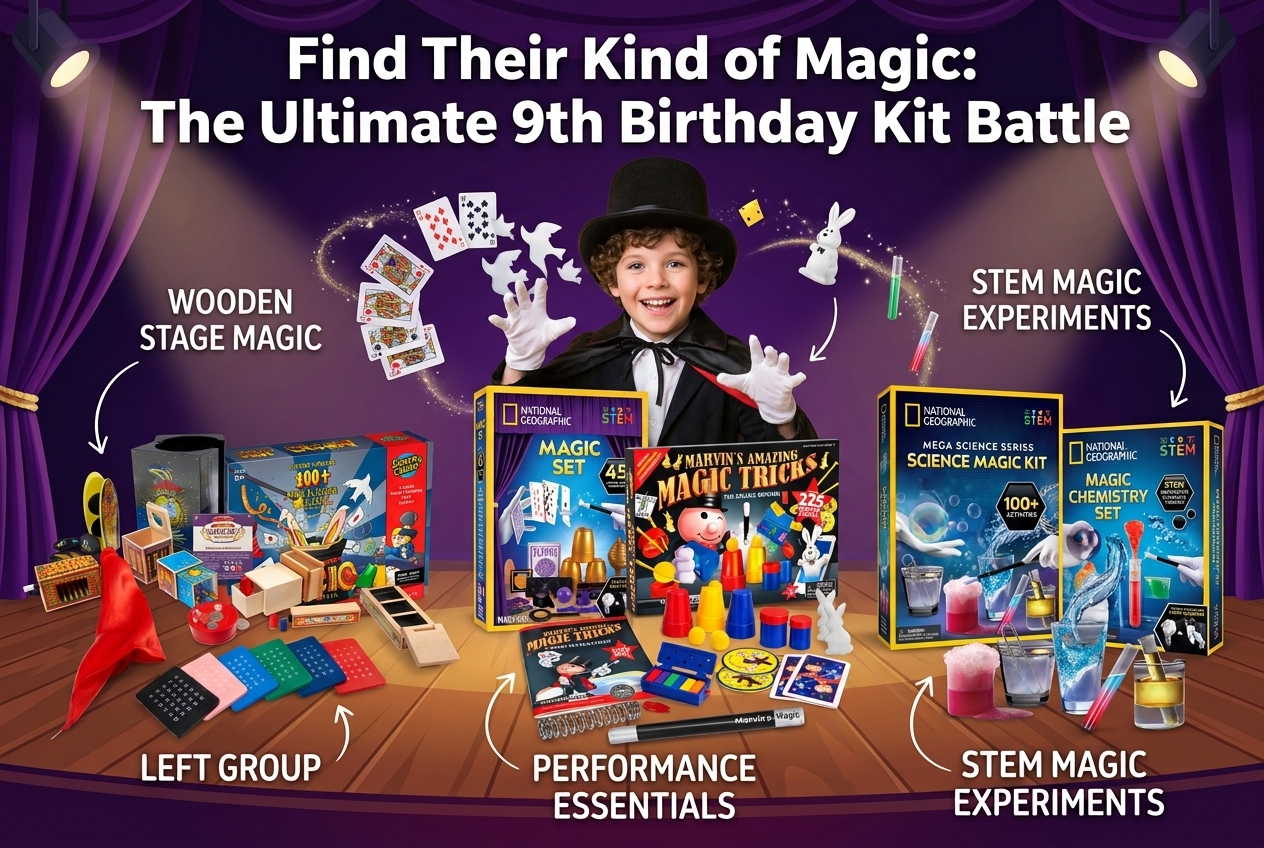
Choosing between magic kits vs magic books for a ninth birthday starts with what your child wants to do: perform classic illusions, explore scientific surprises, or learn a collection of routines. This roundup compares six kits using their supplied props, teaching formats, activity counts, and stated ages.
No standalone magic books appear among these selections, so you won’t find a book-versus-kit winner here. Instead, you can compare kits that include printed guidance, video lessons, or science explanations. All six list age guidance that includes nine-year-olds, but their contents offer quite different experiences.
Quick Picks
- Recommended for varied tricks with organized storage: Mega Magic Kit for Kids, with 28 props, video tutorials, and a two-level storage box.
- Recommended for classic illusions with video demonstrations: National Geographic Kids Magic Kit with 45 Tricks, featuring familiar props and a specialized card deck.
- Recommended for cards, mind reading, and theatrical variety: Marvin’s Amazing Magic Tricks Deluxe Edition, with 225 advertised tricks and printed and app-based instruction.
- Recommended for extended science exploration: National Geographic Science Magic Kit with 100+ Experiments, including materials for 20 experiments and a bonus activity booklet.
- Recommended for a focused chemistry collection: National Geographic Magic Chemistry Set with 10 Tricks, featuring color changes, instant snow, and other science effects.
- Recommended for screen-free wooden-prop performances: Melissa & Doug Deluxe Wooden Magic Set, with 10 classic tricks and a storage box that doubles as a performance space.
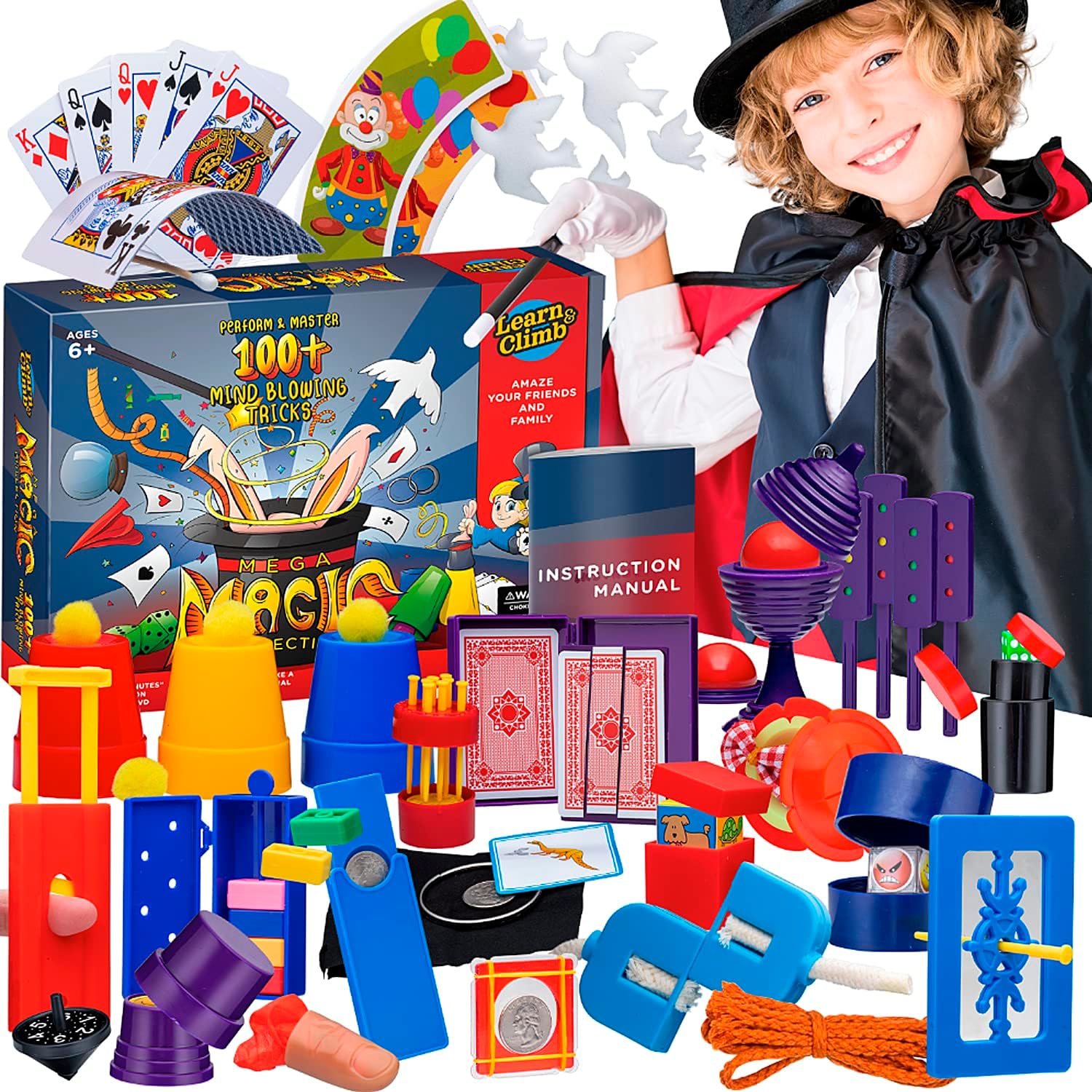
Best for varied tricks with organized storage — Mega Magic Kit for Kids – Perform 100’s of Today’s Most Exciting Tricks – Magic Set with Tutorial Videos for Kids Ages 6-8, 8-10, 10-12
If your child wants a broad introduction rather than one particular kind of magic, this kit may suit you. Its 28 props, different trick levels, and two teaching formats support exploring a varied collection.
The supplied description advertises hundreds of tricks, but that does not mean hundreds of separate props. You get a collection of equipment alongside a manual and step-by-step videos from magician Leif Davis. The two-level magic box adds a useful storage feature if keeping the gift together matters to you.
Key Features
- 28 magic props and hundreds of advertised tricks.
- Instruction manual and step-by-step tutorial videos.
- Different levels of tricks.
- Two-level box for storage.
Pros
- Printed and video instruction give you two ways to approach learning.
- Multiple trick levels provide material beyond a single starting routine.
- The included box keeps storage part of the package.
Things to Consider
The supplied age descriptions vary across the title and product details, although each includes age nine. The advertised trick total describes possible routines, not the number of individual props.
Best for: Your nine-year-old who wants to try a range of magic tricks with both written and demonstrated instruction.
Best for classic illusions with video demonstrations — National Geographic Kids Magic Kit with 45 Tricks for Kids Ages 8-12 | Perform Classic Illusions, Performance Props, STEM Learning, Video Instructions from a Professional Magician, Birthday Gift
Choose this direction if your child pictures magic as cups and balls, disappearing objects, and card tricks. The named props give you a clearer idea of the performance styles than a headline trick count alone.
The kit includes cups and balls, a false thumb tip, a ball-and-vase effect, a mysterious coin case, and a wand. A specialized magician’s card deck adds card routines. Video demonstrations cover the tricks and performance tips, while variations offer material beyond the fundamentals.
Key Features
- 45 advertised tricks with classic performance props.
- Specialized magician’s card deck.
- Step-by-step video instructions from a professional magician.
- Fundamental methods and more advanced variations.
Pros
- The named props span several recognizable types of illusion.
- Video instruction includes performance guidance as well as methods.
- Trick variations let your child revisit the same equipment.
Things to Consider
The supplied details describe video instruction through a link. If avoiding digital instruction matters to you, the Melissa & Doug set explicitly offers screen-free play with illustrated instructions.
Best for: Your child who wants classic prop and card magic with demonstrations to follow.

Best for cards, mind reading, and theatrical variety — Marvin’s Amazing Magic Tricks Deluxe Edition – 225-Trick Kit, Ages 6+ | Mystical Cards, Mind Reading Canisters, Magic Theater, Wand, Beginner Magic Set For Kids, App Video Instructions
Marvin’s may appeal if your child wants to build a show around several kinds of effects. Its named equipment combines cards, apparent mind reading, and theatrical props rather than focusing on chemistry experiments.
The collection advertises 225 tricks and includes Mystical Magic Cards, Mind Reading Canisters, a Magic Theatre, and a wand. A picture-led guide provides printed steps, while the Marvin’s Magic app supplies video lessons. That combination gives you a meaningful alternative to a standalone book without removing printed instruction.
Key Features
- 225 advertised tricks for ages six and older.
- Cards, Mind Reading Canisters, Magic Theatre, and wand.
- Illustrated, step-by-step printed guide.
- Video instruction through the Marvin’s Magic app.
Pros
- Named props support several performance themes.
- Picture-led instructions provide a reference away from videos.
- App lessons complement the printed methods.
Things to Consider
The video component uses an app. Also, 225 refers to the advertised tricks, not 225 separate props; compare the actual equipment and teaching format before choosing by count.
Best for: Your budding performer who wants cards and mind-reading effects alongside show-style props.

Best for extended science exploration — National Geographic Science Magic Kit with 100+ Experiments for Kids 8-12 | Magic Tricks, Chemistry Activities, Hands-On Science Experiments, STEM Projects, STEM Learning Toy, Birthday Gift
This option may suit your child if the explanation behind a surprising result matters as much as the performance. Its strongest distinction is the combination of supplied experiments and additional household-item activities.
The kit includes materials for 20 magic experiments and a bonus booklet with more than 85 additional experiments. The learning guide connects activities to scientific principles, including the pH scale and the behavior of hydrophobic materials. That makes the educational content more specific than a general promise of STEM learning.
Key Features
- Materials included for 20 magic experiments.
- Bonus booklet with 85-plus additional experiments.
- Step-by-step experiment guidance and scientific explanations.
- Bonus activities using common household items.
Pros
- The guide explains scientific principles alongside the activities.
- The bonus booklet expands the collection beyond the supplied experiments.
- The included materials support a defined starting group of 20 experiments.
Things to Consider
The 100-plus headline does not mean the box supplies materials for every activity. The additional booklet uses common household items, so distinguish the included experiments from the extension activities.
Best for: Your science-curious nine-year-old who wants explanations and a broader collection of follow-on activities.

Best for a focused chemistry collection — National Geographic Magic Chemistry Set with 10 Tricks for Kids Ages 8-12 | Science Experiments, STEM Projects, Science Toys, Hands-On Learning, Magic Tricks, Birthday Gift
Consider this set if your child enjoys surprising transformations and you prefer a clearly defined collection of 10 experiments. Each experiment takes the form of a magic trick.
Named activities include making a coin float, changing liquid colors, creating instant snow, and catching bubbles in your hand. The illustrated learning guide explains the science and introduces scientific techniques. A wand and white gloves add performance accessories to the experiment-focused package.
Key Features
- 10 unique chemistry experiments presented as tricks.
- Included tools and materials for the listed experiments.
- Full-color learning guide with illustrated instructions.
- Magic wand and white gloves.
Pros
- The supplied details identify concrete activities you can match to your child’s interests.
- The guide combines instructions with scientific explanations.
- Performance accessories accompany the experiments.
Things to Consider
This collection lists 10 experiments, rather than the larger experiment-and-booklet format of the Science Magic Kit. Its focus is chemistry-based effects, not the card routines or classic illusion props described in other selections.
Best for: Your child who wants a focused set of science surprises with an explanation behind each effect.

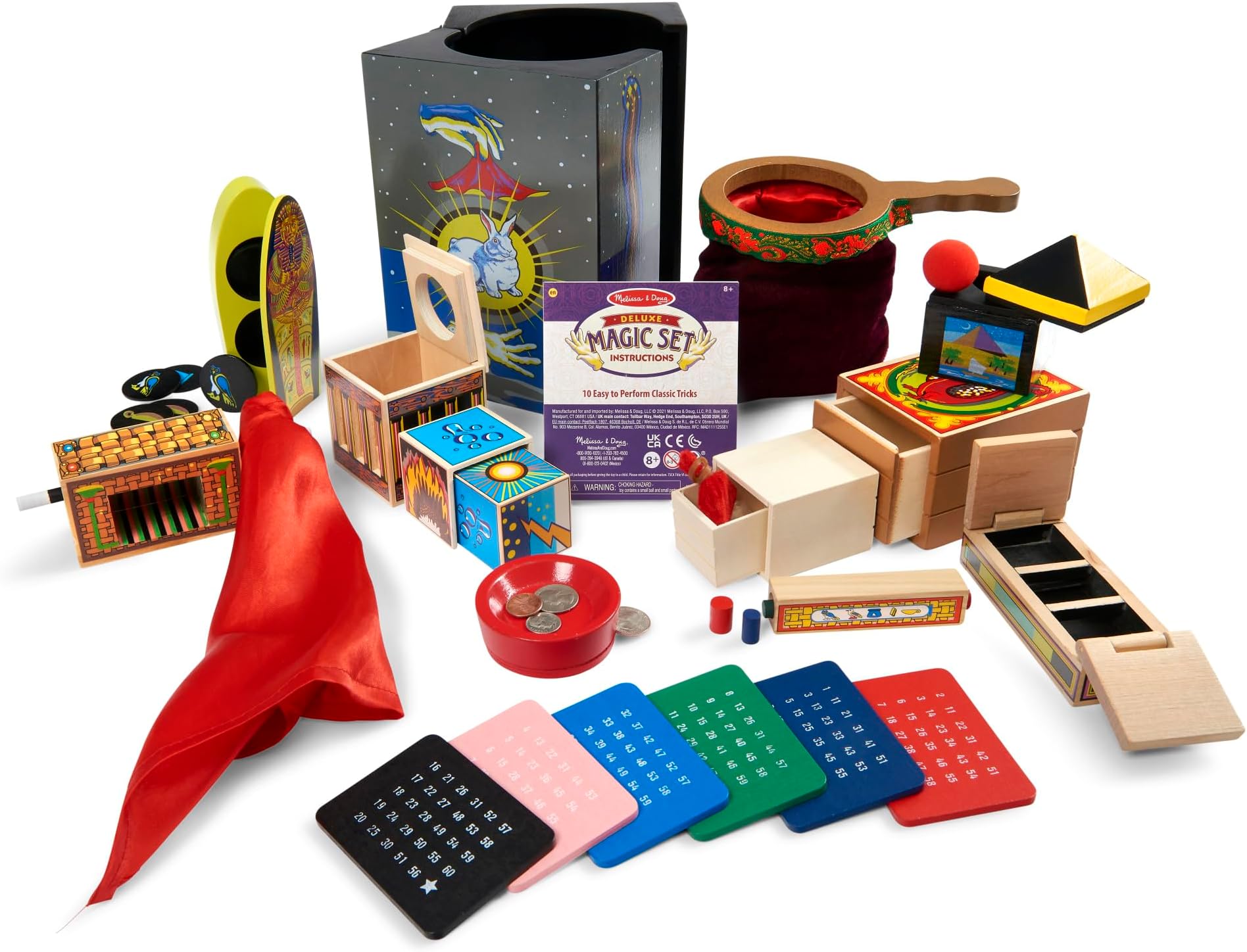
Best for screen-free wooden-prop performances — Melissa & Doug Deluxe Wooden Magic Set With 10 Classic Tricks | 10 Professional Magic Tricks, Disappearing Ball, Secret Silks, Magic Coin Box, Kid-Friendly Guide, Toys for Kids, Ages 8+
This set may suit you if wooden props, printed instructions, and screen-free play matter more than a large advertised trick total. Its storage box also provides a place to present the tricks.
The 10 classic routines include Disappearing Ball, Magic Coin Box, Secret Silks, Great Escape, and Magic Number Prediction. Illustrated instructions accompany the multi-piece tricks. Unlike the science selections, this gift centers on traditional illusion props and performance rather than explanations of chemical effects.
Key Features
- 10 classic, multi-piece magic tricks.
- Solid-wood set with a folding wooden storage case.
- Storage box doubles as a performance space.
- Illustrated instructions; ages eight and older.
Pros
- Printed instructions support the stated screen-free play format.
- The wooden case serves both storage and performance purposes.
- The supplied list identifies all 10 classic tricks.
Things to Consider
You get a defined collection of 10 tricks rather than hundreds of advertised routines. That narrower selection may suit your priorities, but it differs from the variety-led Mega and Marvin’s kits.
Best for: Your nine-year-old who wants traditional props and a small performance space without relying on video lessons.
Product Comparison
| Product | Recommended use | Key distinction | Teaching format |
|---|---|---|---|
| Mega Magic Kit for Kids | Varied tricks with storage | 28 props; two-level storage box | Manual and tutorial videos |
| National Geographic Kids Magic Kit with 45 Tricks | Classic illusions and cards | Classic props and specialized card deck | Step-by-step videos |
| Marvin’s Amazing Magic Tricks Deluxe Edition | Cards, mind reading, and theatrical variety | 225 advertised tricks | Picture guide and app videos |
| National Geographic Science Magic Kit | Extended science exploration | 20 supplied experiments; 85-plus bonus activities | Experiment guide and bonus booklet |
| National Geographic Magic Chemistry Set | Focused chemistry effects | 10 experiments with wand and gloves | Illustrated full-color learning guide |
| Melissa & Doug Deluxe Wooden Magic Set | Screen-free classic performances | 10 tricks; wooden performance/storage box | Illustrated instructions |
How to Choose the Right Magic Gift
Start with the kind of magic your child enjoys
For cards, disappearing objects, and apparent mind reading, compare the traditional performance kits. For color changes and scientific explanations, look at the two National Geographic science selections.
Compare teaching formats, not just equipment
Mega and Marvin’s combine printed guidance with videos. The National Geographic 45-trick kit describes video demonstrations and performance tips. Melissa & Doug explicitly emphasizes screen-free play, while the science kits include learning guides.
Separate tricks, props, and experiments
These counts measure different things. Mega lists 28 props supporting hundreds of tricks. The Science Magic Kit separates 20 supplied experiments from 85-plus additional activities. A larger headline number alone does not establish a better birthday gift.
Decide whether storage or presentation matters
Mega includes a two-level storage box. Melissa & Doug goes a step further in a different direction: its wooden box doubles as a performance space. Those are concrete distinctions if your child wants to arrange a show.
Keep the book comparison within the available evidence
If you came looking for magic books for nine-year-olds, this selection cannot establish which standalone book to buy. You can, however, choose among kits with printed manuals, picture-led methods, or science explanations when written learning matters to your family.
Final Verdict
For magic kits vs magic books, these selections support choosing a kit by its contents and teaching style—not declaring one format universally better.
- Choose Mega Magic Kit if you want varied tricks, two teaching formats, and organized storage.
- Choose National Geographic Kids Magic Kit with 45 Tricks if classic illusions and video demonstrations match your child’s interests.
- Choose Marvin’s Deluxe Edition if cards, mind reading, and theatrical variety appeal most.
- Choose National Geographic Science Magic Kit if you want supplied experiments plus additional household-item activities.
- Choose National Geographic Magic Chemistry Set if 10 specific science-based tricks sound like the right focus.
- Choose Melissa & Doug Deluxe Wooden Magic Set if screen-free instruction and a wooden performance box are your priorities.
FAQ
Do these kits include standalone magic books?
No standalone book is listed as a featured product. Several kits include manuals, illustrated guides, or activity booklets alongside their equipment.
Which options include video instruction?
Mega Magic Kit, National Geographic Kids Magic Kit with 45 Tricks, and Marvin’s Deluxe Edition describe video instruction. Marvin’s delivers its video lessons through an app.
Does the Science Magic Kit include materials for every bonus experiment?
The supplied details specify materials for 20 experiments. The bonus booklet adds 85-plus experiments using common household items.